
GSP - Strategy


In today's fast-paced business environment, monitoring and reporting performance effectively is crucial for organisational success. GSP - Strategy Scorecards offer a powerful tool to achieve this, providing a visual representation and a centralised platform to integrate Key Performance Indicators (KPIs) and deliver detailed performance insights.
By consolidating multiple performance measures, Scorecards empower decision-makers to track priorities and align strategies accordingly. This blog explores the benefits, implementation, and best practices of using scorecards within GSP - Strategy to enhance decision-making, accountability, and alignment with strategic goals.
Scorecards in GSP – Strategy are designed to help organisations monitor and report their performance effectively. They act as a comprehensive tool to integrate KPIs, offering a detailed overview of achievements and areas for improvement. By consolidating various performance measures, scorecards enable decision-makers to track priorities accurately and align their strategies accordingly. A Scorecard typically includes the following key components:
Integrating these elements, Scorecards provide a clear, structured, and actionable view of organisational performance.
 Figure 1.0: Scorecards in GSP - Strategy
Scorecards play a vital role in performance measurement by offering a systematic approach to tracking data. They ensure accurate and consistent reporting, providing several key benefits:
Learn how to create scorecards with our step-by-step guide.
Maximising your Scorecard’s effectiveness involves strategic usage. Here are some tips and best practices.
Define Clear KPIs
Set Realistic Targets
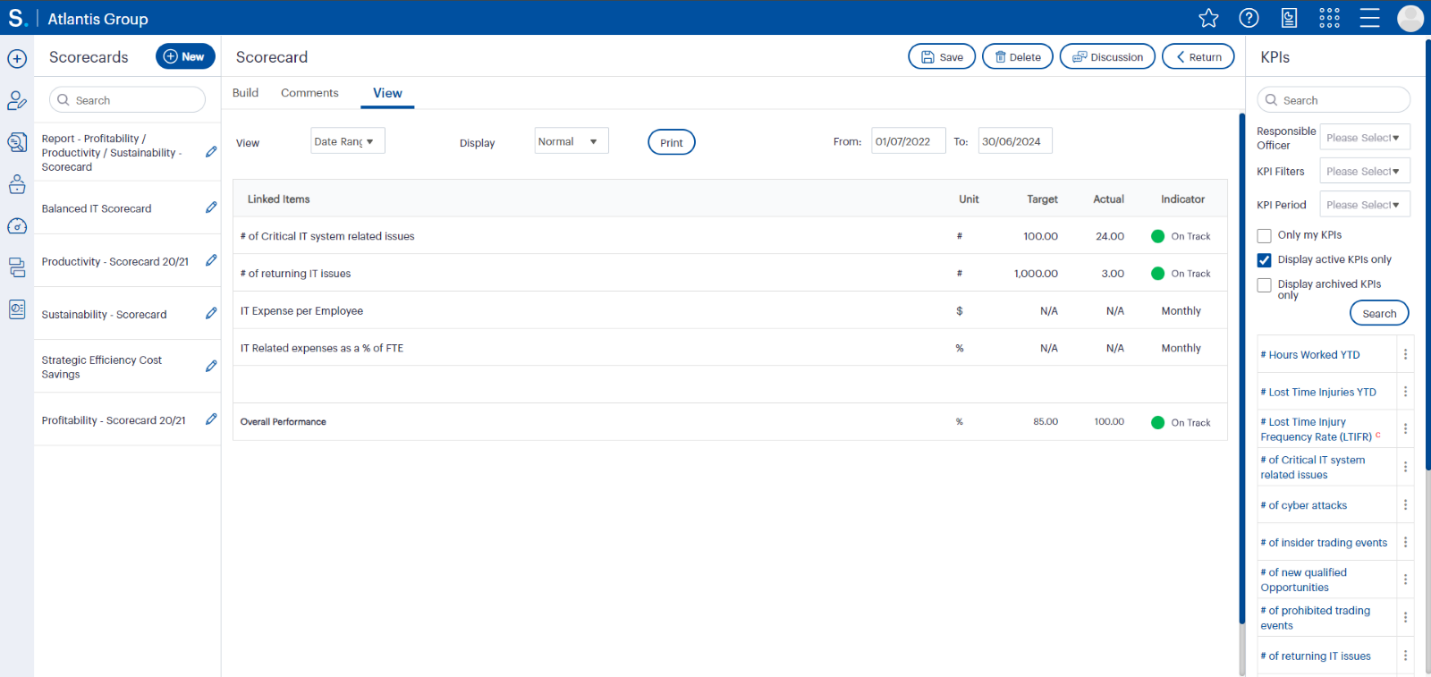 Figure 2.0: The Scorecard View Tab in GSP - Strategy
Monitor Regularly
Viewing Scorecards: The view tab offers several display options
Analyse Trends
Use Visual Indicators
Encourage Collaboration
 Figure 3.0: Add comments suing Scorecards in GSP - Strategy
Comments
Leverage Dashboards
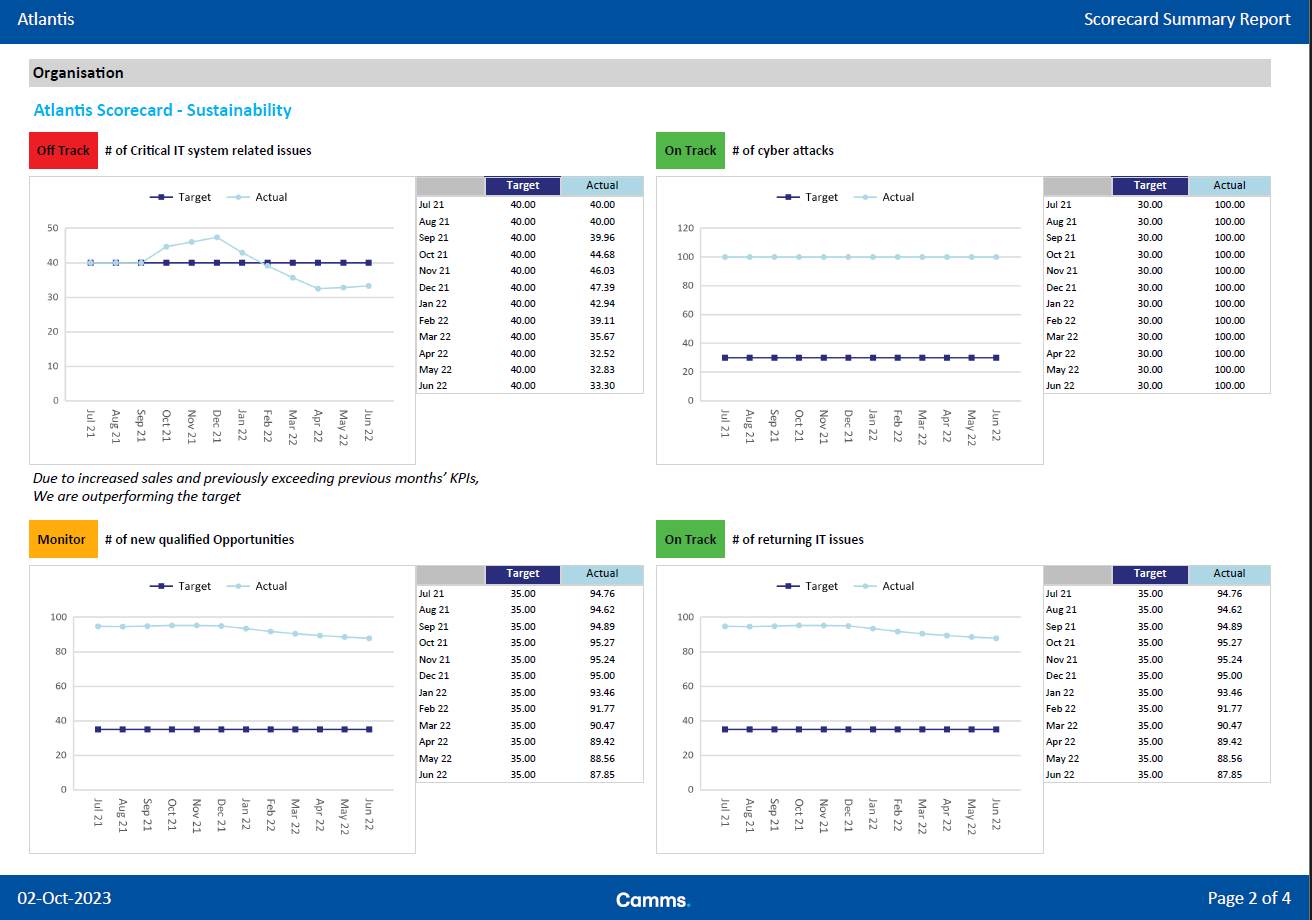 Figure 4.0: A report summarising target and actual scorecard details, including the latest comment, compatible with organisation, planning, and custom hierarchies.
Regularly Review and Revise
Training and Development
By following these best practices, you can maximise the utility of your Scorecard, ensuring it becomes a powerful tool for driving performance and achieving organisational success.
Need more help or personalised guidance with configuring and utilising Scorecards to their full potential? Schedule a virtual consulting session through GSP College.
Scorecards in GSP – Strategy are a game-changer for managing performance. They centralise data, provide accurate progress measurements, and ensure consistent reporting. Using Scorecards can boost decision-making, improve accountability, simplify reporting, and align activities with strategic goals. Start using Scorecards today and watch your organisation achieve greater success.
Dive deeper into Scorecards by watching our on-demand webinar: Using Scorecards in GSP – Strategy.
Join the Riskonnect Community for insightful discussions on Scorecards and other essential features in GSP – Strategy with experienced experts and fellow users to explore the platform and its features in-depth.